
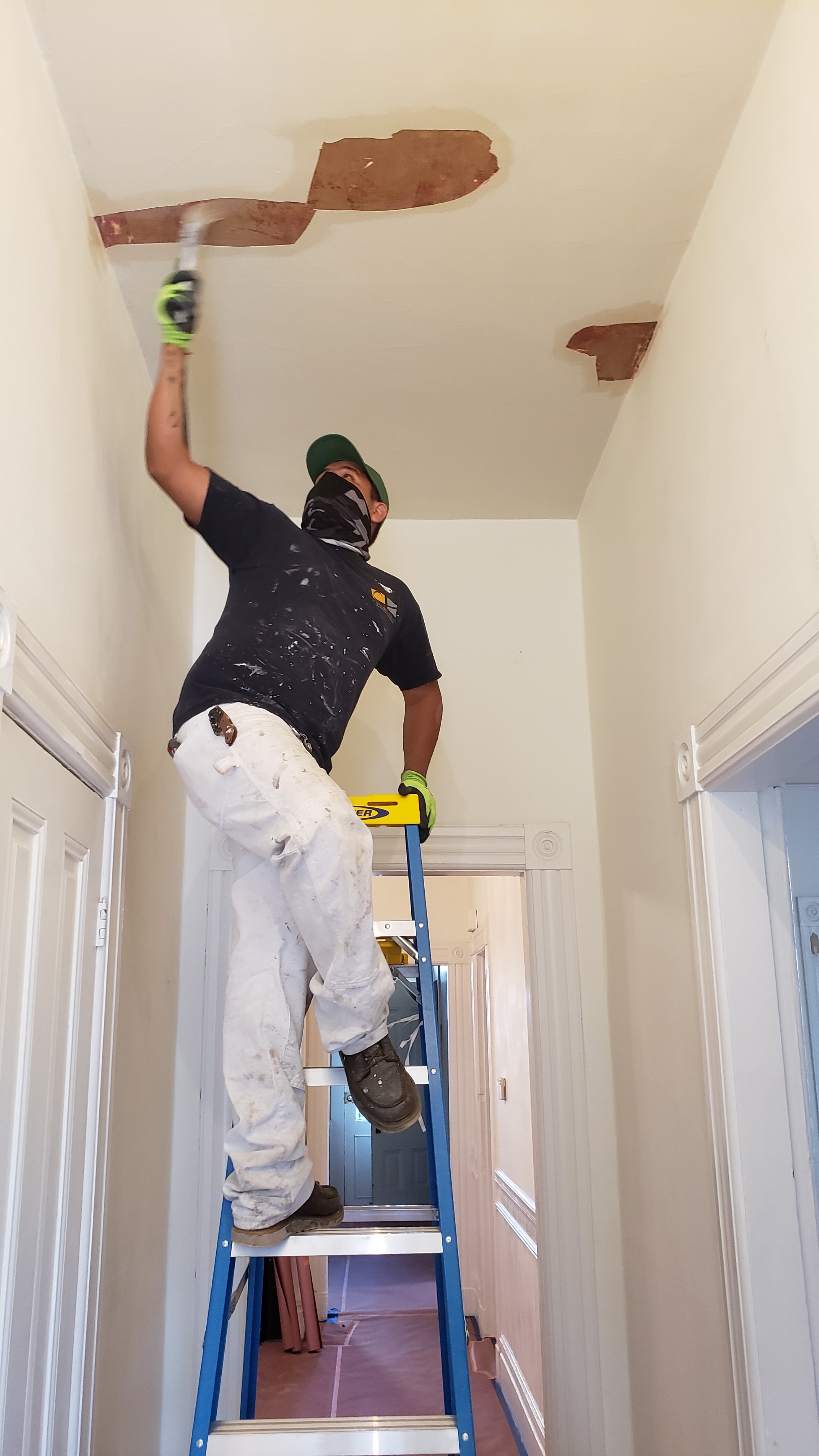
Sealing drywall damage using problem surface sealer
In this article, we address how to paint interior problem surfaces so you get better results. By problem surface, we are referring to substrates that are loose, unsound, chalky, water-damaged or glossy. Applying patching compound or paint over these surfaces is not recommended and will lead to a poor finish and failing paint. The result will surely be a finish that bubbles, peels, or flakes off. Here are some tips for painting problem surfaces.
Drywall that is damaged due to water leak or wallpaper removal:
As painting contractors, we often deal with drywall that has been damaged as a result of water leaks or wallpaper removal. painting over these surfaces can lead to bubbling and flaking when drywall mud or paint is applied. To prevent this, we first apply Zinsser Gardz Problem Surface Sealer. This “problem solver” is our “go-to” product for fixing unstable drywall surfaces . This surface sealer soaks into and binds old wallpaper layers, water damaged or torn drywall, crumbling plaster and other situations involving unstable walls. This low odor, water based formula creates a hard seal over damaged drywall, adhesive residues and other chalky surfaces. Some uses include:
- Repairs torn paper on damaged drywall, eliminates bubbles
- Seals skim coats & spackling
- Protects new drywall
- Seals old wallpaper adhesive
Painting over old, chalky paint:
In old homes that have not been painted in ages, you may encounter “chalky” walls. Chalk is a powdery residue that develops on weathered (usually oil-based) surfaces that have deteriorated. Chalk is more commonly encountered outside, but can develop on interior surfaces as well. To test for chalk, rub your hand on the wall. If it comes away coated in a powdery residue, the chalk needs to be addressed before painting, as it creates an adhesion problem. Please wash your hands afterwards as old paint surfaces may contain lead. Some ways to address chalk include:
- Wash chalky surface with tsp no-rinse substitute. After it dries, test for chalk. If there is still chalk, then..
- Prime with a primer that is formulated to bind chalk. We recommend zinsser peel stop or zinsser triple thick. Minimal chalking can be adressed using a bonding universal primer like Zinsser “smart prime”.
Painting dense or glossy surfaces:
Most paint doesn’t adhere well to slick, glossy surfaces like lacquered trim, old oil-based paint, or tile. We have encountered countless interiors where the prior painters applied “latex over oil paint” without adequately sanding and de-glossing. There is no bigger nightmare for a painter than to finish a project and then find out the paint you applied is prone to peeling. Some paints and primers are especially formulated to stick to glossy surfaces, but one should still follow these best practices:
- Always do a “stick test” before painting! Simply paint a sample on the surface in question, allow it to dry, then scratch it to test the adhesion. This is especially helpful if you are not 100% sure whether or not your paint will stick without later peeling. A stick test will also tell you how much sanding is needed, or whether you need a primer. We often do “stick tests” even when we are using a high adhesion paint such as Dunn Edwards Aristoshield. To perform the stick test, sand and degloss an area, and then paint a sample both over the sanded area and an un-sanded area for a comparison. Allow the paint to dry before scratching with a fingernail or scraper to test adhesion..
-
Clean thoroughly to remove dust, grease, or oils. Apply a “de-glosser” to promote adhesion. However, be aware that really shiny surfaces must be sanded!
-
It is best to sand with fine-grit sandpaper such as 180 to dull the sheen and create a surface the paint can grip. Sanding with 220 grit may not create enough grip. Sanding with anything under 150 grit will result in sanding scratches that are visible through the finish coat.
-
If necessary, apply a high adhesion primer designed for glossy substrates. most paint stores have primers with high adhesion.
-
Use high-quality paint suitable for the surface type.
Painting over water stains:
Water stains are tough, as they will bleed through all paints and most stain blocking primers. If you are dealing with water stains, it is best to use a shellac-based primer. Be aware that shellac (alcohol) based primers are extremely stinky and it is not worth it to clean the brushes and rollers afterwards, so just buy something cheap and be prepared to them away.
Final Thoughts
Painting problem surfaces requires a bit more effort, but it’s well worth the time to get a durable, attractive finish. The key is preparation—knowing what you’re working with and using the right tools and primers to address the challenge. With proper technique and materials, even the most stubborn surfaces can be transformed into a beautiful part of your home.
